If you've spent any time in the wellness space recently, you've probably heard the word "peptides" thrown around. They're discussed in podcasts, mentioned in gym locker rooms, and marketed heavily online.
Unfortunately, they're also misunderstood.
As a nurse practitioner with a background in emergency medicine and functional care, I believe patients deserve clear, honest education about what peptides are, what they can realistically do, and who should consider them. My goal here isn't hype. It's clarity.
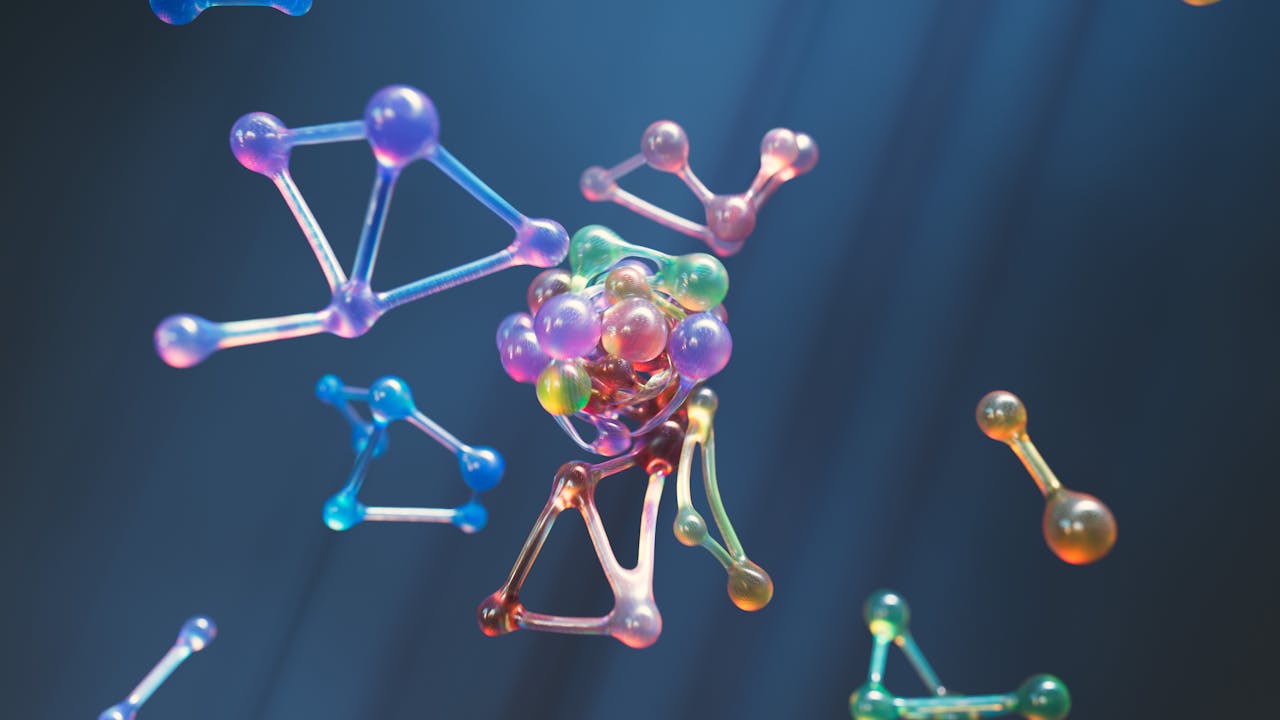
Peptides are short chains of amino acids. Amino acids are the building blocks of proteins. When these chains are shorter, we call them peptides. When they are longer and more complex, we call them proteins.
Your body already produces peptides naturally. They act as signaling molecules. In simple terms, they tell your cells what to do. They help regulate:
Therapeutic peptides are designed to mimic or enhance these natural signaling processes.
Think of peptides as targeted messengers. Instead of introducing something foreign to the body, many peptide therapies work by stimulating pathways that already exist.
Most of the patients I see are not looking for shortcuts. They are looking for optimization. They want to feel like themselves again.
As we age, several things decline naturally:
Peptide therapy aims to support these systems in a more physiologic way than traditional hormone replacement alone.
But not all peptides are the same. And not every patient needs them.
Let's break down some of the most commonly discussed categories.
These peptides stimulate your body's own production of growth hormone rather than replacing it directly.
Potential benefits may include:
For patients in their late 30s, 40s, and 50s who feel like recovery has slowed dramatically, this category often generates the most interest.
It's important to understand that this is not the same as synthetic growth hormone. We are supporting your natural rhythm, not overriding it.
Many people are familiar with GLP-1 medications because of their impact on weight loss and metabolic health.
These peptides help regulate:
When used appropriately, GLP-1–based therapies can be life-changing for patients struggling with obesity, insulin resistance, or metabolic syndrome.
At The Lotus Medical, we do not view GLP-1 as a cosmetic tool. It is a metabolic intervention. And it works best when paired with lifestyle change, nutritional guidance, and strength training.
The peptide is not the solution. It is part of a structured plan.
There are also peptides that focus more specifically on tissue repair and inflammation modulation.
These are often discussed in the context of:
For former athletes, active adults, or individuals recovering from repetitive strain injuries, this category can be worth discussing.
But again, this is not magic. If someone continues poor biomechanics, poor sleep, and high inflammatory nutrition, no peptide will override that.
There is growing interest in peptides that may support mitochondrial function, cellular energy production, and long-term vitality.
These are often part of a broader conversation about:
In my clinical approach, these therapies are reserved for patients who already have foundational habits in place. We focus first on sleep, strength training, nutrition, hormone balance, and cardiovascular markers.
Optimization should always follow stabilization.
Let's be honest.
Peptides are not a replacement for:
They are not a substitute for testosterone therapy when true hypogonadism is present. They are not a shortcut to elite performance without effort. They are not appropriate for every person.
There is also a significant difference between medically supervised peptide therapy and compounds purchased online without regulation. Quality control matters. Dosing matters. Lab monitoring matters.
This is where clinical oversight becomes essential.
You might be a candidate for peptide discussion if:
The key phrase is this: already doing the basics.
If someone is sleeping five hours per night, eating ultra-processed food, and training inconsistently, we do not start with peptides. We start with fundamentals.
At our clinic, peptide therapy always includes:
We assess with very comprehensive blood panels. We adjust based on objective data, not how someone "feels" alone. We allow our patients to be part of the treatment, rather than dictating it solo.
Peptides should be part of an intentional, monitored plan.
I spent years working in emergency medicine. In that environment, we intervene when something has already gone wrong.
Concierge and functional care allow us to intervene earlier. Peptides fall into that preventative and optimization model.
They are tools. Nothing more, nothing less.
Used appropriately, they can support recovery, metabolic health, and performance. Used carelessly, they can create imbalance.
My role is not to sell peptides. My role is to evaluate whether they make sense for your physiology, your labs, your goals, and your lifestyle.
If they don't make sense, we say that.
If they do, we build a plan around them.
The future of medicine is not about doing more. It is about doing what is precise.
If you are curious whether peptide therapy fits into your wellness strategy, schedule a consultation. We will review your labs, your goals, and your foundation first.
Because optimization should never come at the expense of health.

Weight Loss
March 19, 2026

Regenerative Medicine
March 14, 2026

Hormone Health
March 9, 2026

Message us on WhatsApp
Scan with your phone's camera to start a chat.
For general questions and scheduling. Please don't share medical details over WhatsApp.
Open WhatsApp

